 Source code available on Github
After an entire year of imagining, designing, and building, I’m excited to announce the stable release of Unistyles 3.0!
I still remember those first few weeks when I wasn’t even sure it was possible to bring StyleSheets and styles into C++. Then the beta of react-native-nitro-modules landed at exactly the right moment, and a supportive community rallied around the idea. Today, that ambitious experiment is ready for production.
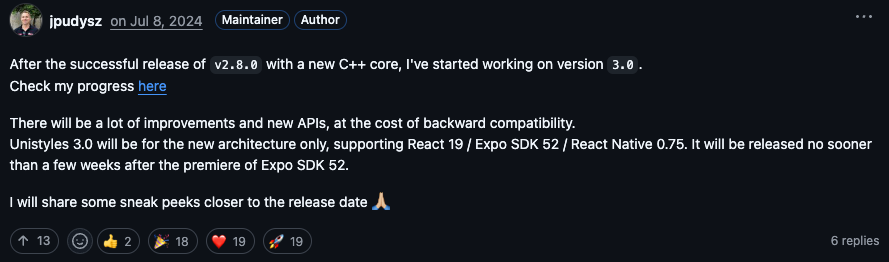
This release wouldn’t exist without the talent and generosity of the following developers.
Thank you 🙏:
- @mrousavy - for react-native-nitro-modules that helped me speed up the developement of Unistyles 3.0
- @brentlok - for awesome web compiler and redesigning Unistyles website
- @tomekzaw - for validating my idea back in 2024!
- @bartlomiejbloniarz - for some useful tips and mentioning different quircks of Fabric
- @piaskowyk - for helping with Reanimated integration
Introduction
New version of Unistyles offers unique tools for styling React Native apps. It’s the only styling library on the market that uses native code and C++ to get job done. It’s tightly integrted with Fabric renderer and completely skipps old architecture.
If you would ask me about the best feature of Unistyles 3.0, I would say - selective updates.
Selective updates
Unistyles 3.0 reads your StyleSheet, styles, and all their dependencies to build a full representation on the C++ side. It knows exactly which style relies on which dependency and which components each style belongs to. Babel plugin can track up to 16 dependencies:
Theme, ThemeName, AdaptiveThemes, Breakpoints, Variants, ColorScheme, Dimensions, Orientation, ContentSizeCategory, Insets, PixelRatio, FontScale, StatusBar, NavigationBar, Ime, and Rtl.
Whenever you reference the theme or rt object inside a style, that link is stored within the style. When any event occurs, Unistyles recomputes and updates only the styles and components that rely on the changed dependency — with no re-render, just like CSS on the web.
This is a game-changer for performance, because your app can update without triggering any re-render at all.
Curious how it works? I encourage you to read the offical guide Look under the hook - how Unistyles works?.
You can also watch my talk during React Native Connection conference that was held in Paris, France:
New features
There’s a lot to cover, and I don’t want to repeat information from previous posts or the documentation, so I’ll focus on the highlights only.
- New API that follows React Native StyleSheet API
- Compound variants
- Scoped themes
- Custom web parser, web only styles, CSS pseudo classes, classNames, and more
- Avoiding keyboard with new IME inset
- Deep Reanimated integration
- New mini runtime getters
- Custom web with no React Native Web dependency
Tutorial
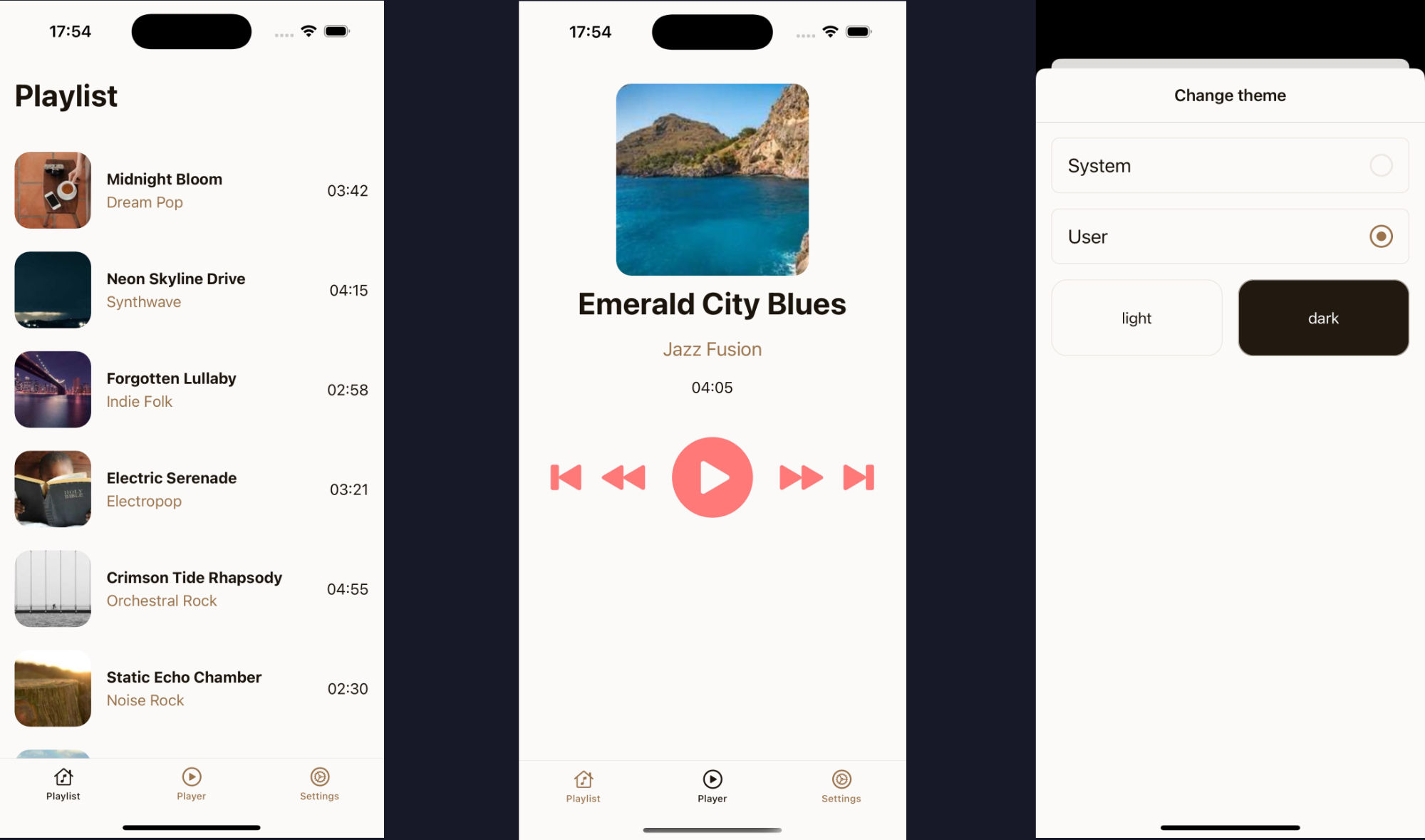
If you’re coming from Unistyles 2.0 or if the new version feels overwhelming - don’t worry. I’ve prepared a hands-on tutorial that walks you through almost every feature of Unistyles 3.0. It takes about one hour to complete.
In the tutorial we’ll build a music-player app using Expo Router, Reanimated, and of course Unistyles.
You can start here.
Sunsetting Unistyles 2.0
Some of you may be wondering what will happen to Unistyles 2.0.
Over the past year I’ve actively supported the 2.x branch releasing 17 versions and answering questions on GitHub and Discord. That support will taper off, but I understand that some businesses aren’t ready to migrate yet.
Going forward, maintenance of 2.x will be limited to critical patches and compatibility updates for new React Native and Expo versions, under these conditions:
Support ends on 31 December 2025, no patches will be released after that date.
Alternatively, support ends once the last compatible versions — React Native 0.84 and Expo SDK 55 are reached.
I hope this timeline gives everyone transparency and enough room to transition to Unistyles 3.0.

What’s next?
You know how it goes — the longer you work on a problem, the more possibilities you discover. I won’t spoil any upcoming announcements, but I have plenty of ideas to make Unistyles even better!
Over the next few weeks I’ll pause feature development and concentrate on:
- tests
- documentation
- repository structure
- supporting you and tracking bug fixes
After summer, when the weather cools down, I’ll dive back into new features.
I’m looking forward to your feedback and ideas!